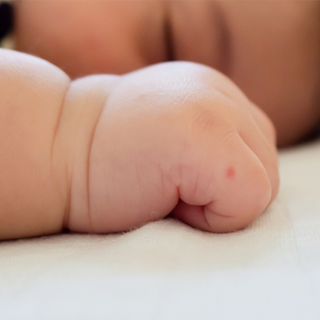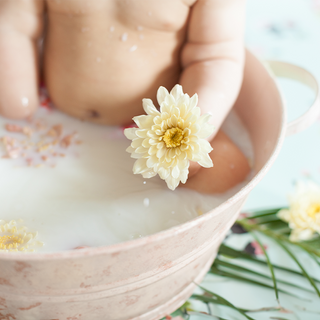




Why does your baby’s skin feel velvety soft one moment, but dry, rough, or flaky the next?
It is one of the most common surprises for new parents: despite applying lotion and keeping bath time gentle, delicate infant skin seems to dry out almost overnight.
It isn't anything you are doing wrong. The truth boils down to pure biology. A baby's skin barrier functions very differently from adult skin, making it uniquely vulnerable to rapid hydration loss.
Here is the science behind why infant skin loses moisture so quickly, the hidden triggers that accelerate dryness, and how a pH-balanced routine can protect your baby’s skin barrier every day. The Science: Why Infant Skin Dries Out So Quickly
To understand why baby skin loses moisture at an alarming rate, it helps to look under the surface. Infant skin is not just a smaller version of adult skin; it is an evolving organ undergoing rapid development.
1. High Transepidermal Water Loss (TEWL)
Transepidermal Water Loss (TEWL) is the process where water passively evaporates from the deeper layers of the skin into the atmosphere. Because an infant's outer skin layer (stratum corneum) is up to 30% thinner than an adult’s, moisture evaporates through it significantly faster.
2. An Immature Acid Mantle
Healthy adult skin relies on a mildly acidic surface film - known as the acid mantle - to seal in moisture and repel environmental irritants. At birth, a newborn's skin pH is nearly neutral. Over the first few weeks, it gradually shifts toward a protective pH of 5.5. Until this barrier fully matures, skin loses moisture rapidly and reacts easily to environmental changes.
3. Lower Natural Moisturizing Factors (NMF)
Infant skin produces fewer natural lipids, oils, and moisture-binding proteins than adult skin. While baby skin absorbs water quickly, it lacks the dense structural lipid network required to retain that water for long periods.
4 Surprising Culprits Stripping Your Baby's Skin Barrier
While structural biology sets the stage for rapid moisture loss, everyday environmental triggers often push delicate skin into active dryness or irritation:
-
Tap Water & Extended Baths: Water alone can dry out infant skin. Prolonged baths - especially in hard water rich in calcium and minerals - wash away essential surface lipids and raise skin pH.
-
Alkaline Soaps & Cleansers: Traditional soaps and heavily fragranced washes disrupt the natural acid mantle, stripping away lipids that take hours for baby skin to regenerate.
-
Low Humidity & Temperature Shifts: Air conditioning in the summer and indoor heating in the winter pull ambient moisture straight out of thin infant skin.
-
Friction from Fabrics: Coarse cottons, synthetic fibers, and rough towel drying create micro-friction that breaks down fragile skin cells on cheeks, elbows, and knees.
5 Ways to Lock in Deep Hydration and Prevent Dryness
Protecting your baby's skin barrier isn't about applying heavy products - it's about supporting its natural biology with the right techniques and formulations:
1. Follow the "3-Minute Rule" (Soak and Seal)
Never let baby skin air-dry completely after a bath. Within 3 minutes of lifting your baby from the tub, gently pat them damp with a soft towel and apply a protective moisturizer. This locks bath water directly into the outer skin layers before it evaporates.
2. Choose pH 5.5 Balanced Formulations
To support the developing acid mantle, look for cleansers, shampoos, and lotions strictly formulated at pH 5.5. Keeping skin at its optimal acidic level prevents post-wash tightness and strengthens the barrier against environmental moisture loss.
3. Match the Moisturizer to the Moisture Need
-
For daily full-body care: Use a lightweight, fast-absorbing pH 5.5 Baby Lotion enriched with natural emollients to maintain 24-hour softness.
-
For targeted dry patches: Reach for a rich, high-density pH 5.5 Baby Cream to shield high-friction zones like cheeks, elbows, and knees against moisture loss.
4. Keep Bath Time Short and Lukewarm
Limit baths to 5 to 10 minutes using lukewarm water. Keep washing focused on necessary areas using a soap-free, tear-free cleanser that cleanses without stripping skin oils.
5. Dress in Soft, Breathable Layers
Opt for organic, loose-fitting cotton clothing that reduces friction against fragile skin and allows the barrier to breathe naturally.
Building a Hydrating Routine That Lasts
Infant skin loses moisture faster than adult skin simply because it is built differently. By understanding its delicate biology and choosing pH-balanced care engineered for fragile skin barriers, you can turn daily hydration into a simple, protective ritual that keeps your baby soft, smooth, and comfortable from Day 1.
Your baby's skin barrier works hard every day - and the right routine helps it stay strong. Formulated at a precise pH 5.5, the Softsens baby care line is engineered to support delicate skin against rapid moisture loss. From our tear-free Shampoo to our 24-hour hydrating Lotion and targeted high-density Cream, every formula is dermatologically tested in Europe and 100% hypoallergenic, giving fragile skin the uncompromised protection and gentle science it deserves every single day.