




Reviewed by Dr. Priyanka Gupta
You’ve established a soothing bath routine, lovingly massaged your baby from head to toe with lotion, and tucked them into a soft onesie. Yet, just a few hours later, you notice dry patches returning on their cheeks, arms, or tiny ankles.
If you’ve found yourself wondering why daily moisturizing doesn't seem to be as effective, you are far from alone. Persistent dry skin in babies is extremely common - and it usually isn't a sign that you are doing anything wrong.
Understanding the unique science of infant skin reveals why standard moisturizers often fall short and how simple adjustments to your daily routine can lock in lasting hydration.
1. The Science: Why Baby Skin Dries Out So Fast
To understand why lotion seems to disappear, it helps to look at what makes your baby’s skin unique. Infant skin is not just a smaller version of adult skin; it is a delicate, developing organ with three distinct characteristics:
-
It is 30% Thinner: The outer layer of your baby’s skin (the stratum corneum) is significantly thinner than adult skin, making it far easier for moisture to escape.
-
Rapid Moisture Loss (TEWL): Babies experience high rates of Transepidermal Water Loss - meaning water evaporates from their skin surface up to 3 to 5 times faster than in adults.
-
Underdeveloped Oil Glands: Newborns produce very little natural sebum (oil). While adult skin relies on a mature lipid barrier to lock in water, infant skin lacks this developed oil layer, causing moisture to evaporate quickly into the air.
2. Five Surprising Reasons Lotion Isn't Working
If you are applying lotion regularly but still seeing flaky or rough skin, one of these subtle daily factors might be breaking down their moisture barrier behind the scenes:
-
Applying Lotion to Bone-Dry Skin: Lotion is designed to trap existing water in the skin, not create it from scratch. If you apply lotion to completely dry skin hours after a bath, there is very little ambient moisture for the ingredients to hold onto.
-
Bath Water Is Too Hot (or Baths Are Too Long): While a warm bath is soothing, hot water washes away the few natural lipids your baby’s skin produces. Soaking for more than 10 minutes can actually draw moisture out of the skin barrier, leaving it parched before you even reach for the towel.
-
Using Products with an Alkaline pH: Standard cleansers and traditional soaps often have an alkaline pH between 7.0 and 10.0. Washing with alkaline products disrupts your baby’s natural acid mantle (which thrives at a slightly acidic pH 5.5). A disrupted acid mantle can take up to 6 hours to repair itself - during which time skin loses water rapidly, regardless of how much lotion you apply afterward.
-
Friction from Clothing and Fabrics: Rough fabrics, synthetic materials, or clothing washed in harsh laundry detergents constantly rub against fragile sensitive infant skin. This friction wears down the physical barrier on high-contact areas like elbows, knees, and ankles.
-
Environmental Triggers: Indoor heating in winter, continuous air conditioning in summer, and low outdoor humidity pulls moisture directly out of infant skin throughout the day.
3. How to Fix It: Simple Tips for Lasting Hydration
Rebuilding your baby's skin barrier doesn't require a complicated routine. Making a few targeted tweaks can yield significant results:
-
Master the "3-Minute Rule": After bath time, gently pat your baby's skin with a soft cotton towel, leaving it slightly damp. Apply your moisturizer within 3 minutes of stepping out of the tub to seal in surface water before it evaporates.
-
Switch to a pH 5.5 Cleanser: Look for tear-free washes and cleansers formulated at a strict pH of 5.5. By cleansing without stripping natural skin lipids or throwing off their acid mantle, their skin retains its foundational moisture through the bath.
-
Layer Up for Problem Spots: For stubborn areas like drooly cheeks, dry knees, or flaky ankles, layer a rich, high-density baby cream over top of their lotion to create a breathable protective seal.
-
Adjust the Bath Environment: Keep bath water warm, not hot (around 37°C), keep baths under 10 minutes, and use a gentle, soap-free cleanser only where needed (hands, feet, and diaper zone).
-
Dress in Breathable Fabrics: Opt for soft, 100% breathable cotton or bamboo clothing to prevent friction and overheating.
Complete Barrier Support with Softsens
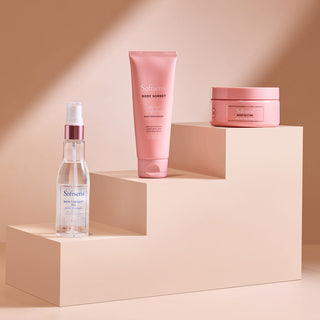
When daily moisture disappears too quickly, your baby’s skin barrier is telling you it needs a product formulated specifically for its delicate biology. The Softsens pH 5.5 Skincare Range is engineered to strengthen that invisible shield from step one:
-
Softsens Tear-Free Baby Wash & Shampoo: Gently cleanses away daily impurities without stripping essential skin lipids or disrupting the natural 5.5 acid mantle.
-
Softsens Baby Lotion: A lightweight, fast-absorbing daily moisturizer enriched with Natural Milk Cream, Shea Butter, and Vitamin E to lock in hydration right after bath time.
-
Softsens Baby Cream: A rich, high-density moisture barrier designed to target stubborn dry patches, calm diaper zones, and deeply nourish delicate facial skin.
You Know Your Baby. We Know What's Best for Their Skin.
Persistent dry skin can be frustrating, but with a gentle, pH-balanced approach, you can help your baby’s skin hold onto the nourishment it needs. By respecting their natural biology and locking in hydration at the right moment, you'll help their invisible shield stay strong, soft, and comfortable every day.
Keywords:
Primary Keywords
-
why is my baby's skin dry even after lotion
-
baby dry skin despite lotion
-
persistent dry skin in babies
Secondary Keywords
-
baby skin moisture loss
-
pH 5.5 baby lotion for dry skin
-
how to fix stubborn dry patches on baby skin
-
best lotion routine for infant dry skin